Saturday, August 1, 2009

Agate in Bronze

Agates are also another favorite natural stone that I enjoy designing. This Agate is in beautiful shades of beiges, browns and the creamy outer raw edge gives this one a look all its own. I’ve free wired it in non-tarnish bronze wire, coiled a little on both sides for texture and added spirals to highlight the bail. Coiled spiral dangles with fossil stones in matching earrings complete the look.


The Agate is provided by Panther Creek Minerals of San Antonio, Texas; a company offering decorator minerals and fossils.

Agates: Balancing physical, emotional, intellectual and spiritual energies; perceptiveness, strength, inspiration, awakening talents.

Find many other pendants and natural gemstone jewelry at Timeless Designs.

Wednesday, July 29, 2009

Trilobite Fossils

Phacops rana (Trilobite) is a fossil organism known as a Trilobite (pronounced “tri-lobe-ite”). Trilobites are an extinct category of jointed-legged animals related to crabs, lobsters, shrimp, spiders, and insects. This group of creatures, called arthropods, are among the most complex of all the animals without backbones and trilobites are no exception. They had well-developed nervous systems and large antennae. Trilobites had many appendages for swimming, walking, or feeding. Although these appendages are relatively rare in most groups of trilobite fossils. Phacops is one of four genera for which they are fairly well known and studied. Trilobites also had a hard outer skeleton composed of chitin, a complex organic protein, and the mineral apatite.

Trilobites are a common fossil in many of the early to middle Paleozoic rocks of central Pennsylvania, i.e., rocks that are between 570 and 365 million years old. Complete fossil specimens are rare because the animals were composed of rigid outer skeletal segments joined by flexible organic connections that decayed on the death of the animal. An interest in trilobites is not restricted to scientists and geological dilettantes. They are prized by lapidarist and jewelry and curio collectors. This interest is a long-standing one. Trilobites were found on necklaces belonging to the prehistoric inhabitants of 15,000 year old rock shelters of Europe. The Ute Indians of the western United States fashioned trilobites into amulets. The Ute name for these fossils was, “timpe khanitza pachavee” which means “little water but like stone house in.”

*Information provided by the resident family gemologist.

Wednesday, July 22, 2009

Polish Cleaning Tips & Techniques

As jewelry designers and makers, silversmiths and wire worker, getting the right shine and cleaning of the jewelry is key to selling. But what is the best way, technique or even equipment to properly clean the jewelry and get them ready for market. Along the way, I’ve picked up several tips and techniques for cleaning the jewelry before putting it out for market.

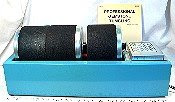
Tumbling jewelry is the most popular and common method used by many people to clean their jewelry. But with so many different machines on the market, which ones are the best or most effective? From reading and getting advice from other designers, silversmiths, and wire worker; tumbling is the best method to really get your jewelry clean and especially to harden any wire or metal used in the jewelry. I personally use a vibrating bowl tumble machine. There are many on the market and is just depends on how much and what you are doing as to what your preference really is; there is also a barrel tumbler that can be used, I just prefer the bowl to contain the jewelry.
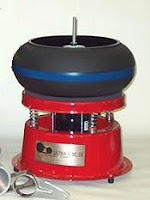
By tumbling the jewelry, it accomplishes several things; first it cleans the pieces and second it polishes or hardens the metals. I mentioned that there are two types, vibrating/bowl and rotary/barrel tumblers. They all come in a variety of sizes and capacity levels; depending on how much jewelry you are going to put in, depends on what type of tumbler you plan to buy. Do your research and make sure the capacity of the one you chose will do the job without marring, mangling or even breaking your jewelry.

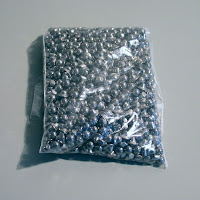
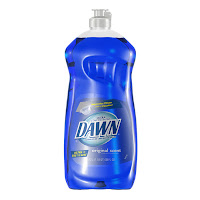
With either of these methods, you will be using a type of tumbling media. Be sure to check what your tumbler can use water (mix in a drop of Dawn dish soap) or uses mixed stainless steel media. With the use of a dish soap, this acts as a detergent that is good a lifting oil and grim from the surfaces of stones and gets into the small pockets of metals.
Once you have chosen and purchased your tumbler, use these easy tips with your jewelry.
Put your jewelry in the bowl or barrel, add water to about 1” above the jewelry, add a drop of dish soap, put the lid back on, tighten and then turn it on. If using a barrel or tumbler that uses dry mix and no water, and then add a hand full of stainless steel mix or what is best for your tumbler, close and tighten lid, turn on.

I’ve found that many people will tumble their jewelry for different times. This is again your preference and will take some trial and error to determine what is best for you. Most people will suggest from 15 minutes to several hours. Depending on what I’m tumbling, I will do between 15-20 minutes, this has been best for my jewelry and tumbler.
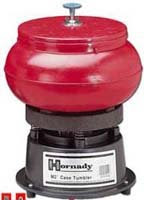
Once complete, then pull your jewelry from the tumbler, rise in warm water and dry with a clean soft towel. I then will lay the jewelry out and allow to fully ‘air’ dry for several hours or over night.

Make sure to clean out and maintain the tumbler which ever kind you purchase. Check with the manufacturer for their cleaning and maintenance tips.

Monday, July 20, 2009

Worldly Agates

Another favorite natural gemstone that I work with are Agates; giving me much inspiration to create. A common, semiprecious type of chalcedony, Agate is the compact, microcrystalline variety of quartz. In general, its physical properties are those of quartz. Most agates form in cavities in ancient lavas or other extrusive igneous rocks. They are characterized for the most part by color bands in a concentric form, and less often by moss-like inclusion (Moss Agate). The characteristic bands usually follow the outline of the cavity win which the mineral has formed. The band colors are determined by the differing impurities present, and occur in shades of white, yellow, grey, pale blue, brown, pink, red, or black. Much of the sliced agate offered on the market in particularly bright colors is dyed or stained to enhance the natural color, an easy process because of its porous nature. It is found in former volcanic regions such as Black Forest, Saxony, Germany; Brazil, Uruguay, Mexico, United States, and Indian peninsula.

History & Legend
Historically, the name Agate is derived from the river Achates in Sicily. The Greek philosopher Theophrastrus described this gem as early as 300 b.c. and in Byzantium people already knew how to enhance the color of agate by burning.

Agates are among the oldest good luck and healing of natural gemstones. Because of its layered structure, agate was often used for the cameo engraving of heads and coats of arms against deeper underlying color.

Agates enable the wearer to choose between true friends and false ones. It is said to avert storms and lightening, protect children from danger, bring prosperity and prevent miscarriages. Traditional properties include balancing physical-emotional-intellectual and spiritual energies, perceptiveness, strength, inspiration, and awakening talents within the wearer. Red agates are related to the solar plexus chakra; blue agates are associated with the throat chakra. Its star sign is for Taurus and Capricorns to sensitize and strengthen willpower. Agates should be worn directly on the skin and cleansed once a month under warm running water.


*Information reprinted from various rock, mineral and gemstone books.

Sunday, July 19, 2009

Colorado's Rare Beauty - Aquamarine

A beautiful and sought after gemstone, Aquamarine is an exceptional natural stone. Unlike Peridot, Topaz, Garnet, Rose Quartz, Amethyst, Pyrite, Citrine, Amazonite, Rhofdnite, Fluorite and Agate, Aquamarine is actually only found in one place in Colorado, the mountain peaks of Mount Antero and White Mountain. -- but it is very high quality.

Aquamarine is the blue, or perhaps more correctly, blue-green or aqua variety of the mineral Beryl. Other gemstone color varieties that are also the mineral beryl include Emeralds (green), Morganite (pink/purple) and Heliodor (yellow). Other colors of beryl are simply referred to by their color, such as Red Beryl. Aquamarine is sometimes found in huge crystals (unlike emerald). It is also known in a glassy form, often without showing crystal form, and sometimes with many holes or other odd shapes. Other times a large cluster of prismatic crystals can be seen to all have the same alignment - a sign that it is really a single crystal with many faces.

Mining and collecting the Colorado Aquamarine is only for the well fit. Mt. Antero is the 10th highest peak in the state at 14,269 feet in elevation. It is located between the towns of Buena Vista and Salida and borders the west of the Arkansas River valley in the Collegiate Peaks range.

Today it is still a challenge and adventure to go up the mountain, whether by foot or four-wheel drive. The 7 mile "one way" drive is rocky, bumpy, steep, narrow, and above the timberline involves some hazards. One miscue on the switchbacks or shelf road could result in a tumble of a thousand feet or more!

There are both patented and unpatented mining claims in the area, but most of the land is considered open for hand-digging. The only known off-limits area is the actual tunnel of the California Mine (patented claim). As of a few years ago the access portal had caved in and was covered with slide debris. Things can change, so be aware of any strictly enforced "keep out" areas that may exist.

As a side note from an article published in late 2007: Things have definitely changed and not all for the better. It has become increasingly difficult for outsiders to legally hunt up on the mountains due to a recent proliferation of new mining claims. Mt. White has seen an enormous amount of activity. Most of the claims have been productive off and on, although no record of recent major finds. Another problem facing collectors is that the State closes down the roads (if you can call them that) in both locations in bad weather except to claim holders. But not all is lost with the profusion of other gems, minerals, rocks and fossils available all over the state.

Visit Timeless Designs for natural gemstone jewelry
Information provided by the family resident Gemologist.

Wednesday, July 15, 2009

Traditional Gemstone Meanings

Throughout time, history and folklore gemstones have been very sought after objects. Aside from being beautiful and luxurious they have been known to carry life energy. Each stone carries many different properties or meaning. They have been used throughout the world to attract luck, love, wealth, stability, and health. Gemstones are also powerful additives in meditation. The gem a person picks out is not just because one stone brings you protection; it may not be as well received to another. Each person will react differently to the stones they choose to wear or use in meditation. Keep that in mind when choosing a stone for a specific reason gets a feel for it before you use it. Here are some of the most common gemstones and their meanings.


Agates: Balancing physical, emotional, intellectual and spiritual energies; perceptiveness, strength, inspiration, awakening talents.
Amber: Soothing, calming, cleansing.


Coral: Diplomacy, quieting emotions, visualization.
Fossil Stone: Accomplishments, improvement of one’s environment, communication, innovation.


Howlite: Awareness, calm, emotional expression, observation, patience, eliminating negativity.
Jaspers: Protection, nurturing, joy, awareness; balancing of physical, emotional, intellectual and spiritual energies.


Mother of Pearl: Mental clarity, intuition, sensitivity, imagination, adaptability, cooperation.
Pearl: Purity, faith, charity, innocence, integrity, focus, wisdom, spirituality, sincerity, fertility.
Turquoise: Spiritual attunement, cleansing, healing, protection, valor, soothing, peace of mind, guidance through the unknown, romantic spontaneity.

Sunday, July 12, 2009

Wire Wrap Natural Gemstones

Natural gemstone pendants hanging from chain, cord, omega, or whatever your choice; and these two pendants don’t disappoint. Beautiful Pietersite in warm colors of rust, brown and a little fleck of cream; Lapis Lazuli with flecks of Pyrite against the deep blue. Both pendants are handcrafted in artistic non-tarnish brass wire.

Lapis Lazuli: Wisdom, intuition, awareness, objectivity, clarity, creativity, expanded consciousness, dreams, purity, courage, serenity.


Pietersite: Willpower, strengthen inner guidance, recognize truths, holds keys to heaven.

For more pendants and other natural gemstone jewelry, visit our website.

Saturday, August 1, 2009

Agate in Bronze

Agates are also another favorite natural stone that I enjoy designing. This Agate is in beautiful shades of beiges, browns and the creamy outer raw edge gives this one a look all its own. I’ve free wired it in non-tarnish bronze wire, coiled a little on both sides for texture and added spirals to highlight the bail. Coiled spiral dangles with fossil stones in matching earrings complete the look.


The Agate is provided by Panther Creek Minerals of San Antonio, Texas; a company offering decorator minerals and fossils.

Agates: Balancing physical, emotional, intellectual and spiritual energies; perceptiveness, strength, inspiration, awakening talents.

Find many other pendants and natural gemstone jewelry at Timeless Designs.

Wednesday, July 29, 2009

Trilobite Fossils

Phacops rana (Trilobite) is a fossil organism known as a Trilobite (pronounced “tri-lobe-ite”). Trilobites are an extinct category of jointed-legged animals related to crabs, lobsters, shrimp, spiders, and insects. This group of creatures, called arthropods, are among the most complex of all the animals without backbones and trilobites are no exception. They had well-developed nervous systems and large antennae. Trilobites had many appendages for swimming, walking, or feeding. Although these appendages are relatively rare in most groups of trilobite fossils. Phacops is one of four genera for which they are fairly well known and studied. Trilobites also had a hard outer skeleton composed of chitin, a complex organic protein, and the mineral apatite.

Trilobites are a common fossil in many of the early to middle Paleozoic rocks of central Pennsylvania, i.e., rocks that are between 570 and 365 million years old. Complete fossil specimens are rare because the animals were composed of rigid outer skeletal segments joined by flexible organic connections that decayed on the death of the animal. An interest in trilobites is not restricted to scientists and geological dilettantes. They are prized by lapidarist and jewelry and curio collectors. This interest is a long-standing one. Trilobites were found on necklaces belonging to the prehistoric inhabitants of 15,000 year old rock shelters of Europe. The Ute Indians of the western United States fashioned trilobites into amulets. The Ute name for these fossils was, “timpe khanitza pachavee” which means “little water but like stone house in.”

*Information provided by the resident family gemologist.

Wednesday, July 22, 2009

Polish Cleaning Tips & Techniques

As jewelry designers and makers, silversmiths and wire worker, getting the right shine and cleaning of the jewelry is key to selling. But what is the best way, technique or even equipment to properly clean the jewelry and get them ready for market. Along the way, I’ve picked up several tips and techniques for cleaning the jewelry before putting it out for market.

Tumbling jewelry is the most popular and common method used by many people to clean their jewelry. But with so many different machines on the market, which ones are the best or most effective? From reading and getting advice from other designers, silversmiths, and wire worker; tumbling is the best method to really get your jewelry clean and especially to harden any wire or metal used in the jewelry. I personally use a vibrating bowl tumble machine. There are many on the market and is just depends on how much and what you are doing as to what your preference really is; there is also a barrel tumbler that can be used, I just prefer the bowl to contain the jewelry.

By tumbling the jewelry, it accomplishes several things; first it cleans the pieces and second it polishes or hardens the metals. I mentioned that there are two types, vibrating/bowl and rotary/barrel tumblers. They all come in a variety of sizes and capacity levels; depending on how much jewelry you are going to put in, depends on what type of tumbler you plan to buy. Do your research and make sure the capacity of the one you chose will do the job without marring, mangling or even breaking your jewelry.

With either of these methods, you will be using a type of tumbling media. Be sure to check what your tumbler can use water (mix in a drop of Dawn dish soap) or uses mixed stainless steel media. With the use of a dish soap, this acts as a detergent that is good a lifting oil and grim from the surfaces of stones and gets into the small pockets of metals.

Once you have chosen and purchased your tumbler, use these easy tips with your jewelry.
Put your jewelry in the bowl or barrel, add water to about 1” above the jewelry, add a drop of dish soap, put the lid back on, tighten and then turn it on. If using a barrel or tumbler that uses dry mix and no water, and then add a hand full of stainless steel mix or what is best for your tumbler, close and tighten lid, turn on.

I’ve found that many people will tumble their jewelry for different times. This is again your preference and will take some trial and error to determine what is best for you. Most people will suggest from 15 minutes to several hours. Depending on what I’m tumbling, I will do between 15-20 minutes, this has been best for my jewelry and tumbler.

Once complete, then pull your jewelry from the tumbler, rise in warm water and dry with a clean soft towel. I then will lay the jewelry out and allow to fully ‘air’ dry for several hours or over night.

Make sure to clean out and maintain the tumbler which ever kind you purchase. Check with the manufacturer for their cleaning and maintenance tips.

Monday, July 20, 2009

Worldly Agates

Another favorite natural gemstone that I work with are Agates; giving me much inspiration to create. A common, semiprecious type of chalcedony, Agate is the compact, microcrystalline variety of quartz. In general, its physical properties are those of quartz. Most agates form in cavities in ancient lavas or other extrusive igneous rocks. They are characterized for the most part by color bands in a concentric form, and less often by moss-like inclusion (Moss Agate). The characteristic bands usually follow the outline of the cavity win which the mineral has formed. The band colors are determined by the differing impurities present, and occur in shades of white, yellow, grey, pale blue, brown, pink, red, or black. Much of the sliced agate offered on the market in particularly bright colors is dyed or stained to enhance the natural color, an easy process because of its porous nature. It is found in former volcanic regions such as Black Forest, Saxony, Germany; Brazil, Uruguay, Mexico, United States, and Indian peninsula.

History & Legend
Historically, the name Agate is derived from the river Achates in Sicily. The Greek philosopher Theophrastrus described this gem as early as 300 b.c. and in Byzantium people already knew how to enhance the color of agate by burning.

Agates are among the oldest good luck and healing of natural gemstones. Because of its layered structure, agate was often used for the cameo engraving of heads and coats of arms against deeper underlying color.

Agates enable the wearer to choose between true friends and false ones. It is said to avert storms and lightening, protect children from danger, bring prosperity and prevent miscarriages. Traditional properties include balancing physical-emotional-intellectual and spiritual energies, perceptiveness, strength, inspiration, and awakening talents within the wearer. Red agates are related to the solar plexus chakra; blue agates are associated with the throat chakra. Its star sign is for Taurus and Capricorns to sensitize and strengthen willpower. Agates should be worn directly on the skin and cleansed once a month under warm running water.


*Information reprinted from various rock, mineral and gemstone books.

Sunday, July 19, 2009

Colorado's Rare Beauty - Aquamarine

A beautiful and sought after gemstone, Aquamarine is an exceptional natural stone. Unlike Peridot, Topaz, Garnet, Rose Quartz, Amethyst, Pyrite, Citrine, Amazonite, Rhofdnite, Fluorite and Agate, Aquamarine is actually only found in one place in Colorado, the mountain peaks of Mount Antero and White Mountain. -- but it is very high quality.

Aquamarine is the blue, or perhaps more correctly, blue-green or aqua variety of the mineral Beryl. Other gemstone color varieties that are also the mineral beryl include Emeralds (green), Morganite (pink/purple) and Heliodor (yellow). Other colors of beryl are simply referred to by their color, such as Red Beryl. Aquamarine is sometimes found in huge crystals (unlike emerald). It is also known in a glassy form, often without showing crystal form, and sometimes with many holes or other odd shapes. Other times a large cluster of prismatic crystals can be seen to all have the same alignment - a sign that it is really a single crystal with many faces.

Mining and collecting the Colorado Aquamarine is only for the well fit. Mt. Antero is the 10th highest peak in the state at 14,269 feet in elevation. It is located between the towns of Buena Vista and Salida and borders the west of the Arkansas River valley in the Collegiate Peaks range.

Today it is still a challenge and adventure to go up the mountain, whether by foot or four-wheel drive. The 7 mile "one way" drive is rocky, bumpy, steep, narrow, and above the timberline involves some hazards. One miscue on the switchbacks or shelf road could result in a tumble of a thousand feet or more!

There are both patented and unpatented mining claims in the area, but most of the land is considered open for hand-digging. The only known off-limits area is the actual tunnel of the California Mine (patented claim). As of a few years ago the access portal had caved in and was covered with slide debris. Things can change, so be aware of any strictly enforced "keep out" areas that may exist.

As a side note from an article published in late 2007: Things have definitely changed and not all for the better. It has become increasingly difficult for outsiders to legally hunt up on the mountains due to a recent proliferation of new mining claims. Mt. White has seen an enormous amount of activity. Most of the claims have been productive off and on, although no record of recent major finds. Another problem facing collectors is that the State closes down the roads (if you can call them that) in both locations in bad weather except to claim holders. But not all is lost with the profusion of other gems, minerals, rocks and fossils available all over the state.

Visit Timeless Designs for natural gemstone jewelry
Information provided by the family resident Gemologist.

Wednesday, July 15, 2009

Traditional Gemstone Meanings

Throughout time, history and folklore gemstones have been very sought after objects. Aside from being beautiful and luxurious they have been known to carry life energy. Each stone carries many different properties or meaning. They have been used throughout the world to attract luck, love, wealth, stability, and health. Gemstones are also powerful additives in meditation. The gem a person picks out is not just because one stone brings you protection; it may not be as well received to another. Each person will react differently to the stones they choose to wear or use in meditation. Keep that in mind when choosing a stone for a specific reason gets a feel for it before you use it. Here are some of the most common gemstones and their meanings.


Agates: Balancing physical, emotional, intellectual and spiritual energies; perceptiveness, strength, inspiration, awakening talents.
Amber: Soothing, calming, cleansing.


Coral: Diplomacy, quieting emotions, visualization.
Fossil Stone: Accomplishments, improvement of one’s environment, communication, innovation.


Howlite: Awareness, calm, emotional expression, observation, patience, eliminating negativity.
Jaspers: Protection, nurturing, joy, awareness; balancing of physical, emotional, intellectual and spiritual energies.


Mother of Pearl: Mental clarity, intuition, sensitivity, imagination, adaptability, cooperation.
Pearl: Purity, faith, charity, innocence, integrity, focus, wisdom, spirituality, sincerity, fertility.
Turquoise: Spiritual attunement, cleansing, healing, protection, valor, soothing, peace of mind, guidance through the unknown, romantic spontaneity.

Sunday, July 12, 2009

Wire Wrap Natural Gemstones

Natural gemstone pendants hanging from chain, cord, omega, or whatever your choice; and these two pendants don’t disappoint. Beautiful Pietersite in warm colors of rust, brown and a little fleck of cream; Lapis Lazuli with flecks of Pyrite against the deep blue. Both pendants are handcrafted in artistic non-tarnish brass wire.

Lapis Lazuli: Wisdom, intuition, awareness, objectivity, clarity, creativity, expanded consciousness, dreams, purity, courage, serenity.


Pietersite: Willpower, strengthen inner guidance, recognize truths, holds keys to heaven.

For more pendants and other natural gemstone jewelry, visit our website.