
 Named in 1811 for its high sodium content, Sodalite is a feldspathoid mineral, a sodium aluminium silicate chloride. It usually forms massive aggregates or disseminated grains. Crystals are relatively rare, and are dodecahedral or octahedral. Sodalite principally occurs in silica-poor igneous rocks such as nepheline syenites and their associated pegmatities. The name Sodalite is derived from two Greek words soda (salt) and lithos (stone
 ) because it is a stone that contains a lot of salt. Since antiquity sodalite has been known as the stone of artists, singers, painters, and sculptures because it is believed to promote inspiration and creativity while also providing protection. It was not used in the Middle Ages but has been rediscovered in modern times and is now become a more popular gem and healing stone.
 The stone itself has inclusions of calcium, salt, and manganese in deep dark blue with white matrix or pockets. Sodalite is a said to be an excellent stone for reducing high blood pressure and when designed in necklaces where the beads or pendant hang down close to the heart, will increase its hypotensive properties. It promotes spiritual harmony, wisdom, logic, calmness for hot-tempered people, healing, stress reduction, companionship, and self-esteem. Sodalite is also most effective on the forehead chakra and especially recommended for the Star Sign of Sagittarius. In order for one to benefit from the stone’s energy, it must be worn or carried around as a touchstone over a long period of time.
Sodalite pendant wired non-tarnish silver, mother-of-pearl beads
Available for purchase along with other natural stone jewelry.


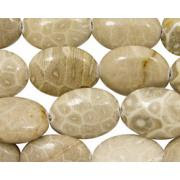 Homegrown and commonly found along the shores of Lake Michigan and Lake Huron in the United States is the water stone Petoskey Fossil Coral. A Petoskey stone is a rock and a fossil, often found in the shapes of pebbles and composed of fossilized coral, Hexagonaria percarinata. These corals colonized Michigan in the Devonian period, about 350 million years ago when most of Michigan was submerged under water. The stones were formed as a result of glaciations, in which sheets of ice plucked stones from the bedrock, grinding off their rough edges and depositing them in the northwestern portion of Michigan’s Lower Peninsula.


